Talk to almost any private practice owner who has been in the game for ten years and ask them about PPOs. Watch what happens to their face.
There is real anger there. And honestly, a lot of it is justified. Reimbursement levels have been chipped away. Write-offs feel insulting. Some carriers have made business decisions that punish quality, time, and care. If you are an associate dentist sitting in a corporate or DSO chair right now, you have probably already absorbed a few rants on this topic.
But here is what almost no one will say publicly: the conversation about PPOs is different when you are starting a practice from scratch than it is when you have owned one for fifteen years. And if you are evaluating ownership right now, you need the version of the truth that accounts for where you actually are, not where someone else is.
So let's get into when PPOs make sense for a startup, when they do not, and how to use them strategically without becoming the bitter owner who hates every Tuesday.
Why Established Owners Hate PPOs (And Why That Is Not Quite Your Problem Yet)
Owners who have been in business for a decade or more usually built their patient base in a different reimbursement world. Fees were higher. Write-offs were smaller. Their schedule is full. Their problem is profit per patient, not patient volume.
When that owner drops a PPO, they may lose 80 or 100 patients out of a 2,500-patient base. They feel the cash flow hit, but they survive it because the patients they keep pay more.
You are not in that position. On day one of a startup, you have zero patients. You are not optimizing for profit per patient. You are optimizing for cash flow, momentum, and getting your operatories full while you make payments on the loan you just signed for.
That is a totally different math problem. And it deserves a different answer.
The New Patient Math No One Talks About For Startups
Starting a practice costs $750,000 to $800,000. The bank loan that funds that number assumes a revenue ramp. That ramp does not care about your philosophical feelings on PPOs. It cares about appointments.
Here is the reality your future patients are walking in with: according to the National Association of Dental Plans, the vast majority of Americans with private dental coverage are enrolled in PPO-style plans, and most patients use an in-network provider directory to choose where to go. Pretending that does not affect your patient acquisition is wishful thinking.
Our goal at Ideal Practices is 100 new patients on opening day. That number does not happen by accident. It happens because our clients build a marketing plan months before opening as part of our 13-stage process, and yes, in many markets, it happens partly because they are credentialed with the right insurance carriers when their doors open.
In an insurance-heavy market, walking into your demographic on day one and saying "fee-for-service only, take it or leave it" is the equivalent of opening a coffee shop and refusing to take credit cards. You can do it. Some people pull it off. But most associates starting a practice are not in a financial position to test that theory while they also figure out hiring, scheduling, and how to run a business they have never run before.
PPOs, used correctly, are not a tax. They are a patient acquisition channel. The right ones, in the right markets, get patients through your door while your direct marketing builds the rest of your base.
Not All PPOs Are Created Equal
This is where the conversation gets useful, and where most associates have been given lazy advice.
You do not sign up for "PPOs." You sign up for specific carriers, with specific fee schedules, in specific regions, that pay specific reimbursement levels. Some of them are reasonable. Some of them are predatory. Treating them as one big block is how owners end up resentful five years later.
What we do with our clients during the StartupMBA® program, part of The Ideal Practices Method™, is sit down with the actual fee schedules. We look at which carriers dominate the market in your demographic. We look at what they pay. We compare that to your fee schedule. And then we make a strategic call, carrier by carrier, on which ones earn a spot in the practice and which ones do not.
That is not a default-yes answer. It is also not a default-no answer. It is a math conversation that depends on your market, your overhead, and your goals.
A Word About PPO Negotiation Programs
While we are on the topic, a warning. There are people in this industry who will sell you a program promising to negotiate your PPO fees for you as a startup. Save your money.
You cannot negotiate as a startup. You have no leverage. No production history. No patient volume. No claims data to put on the table. Negotiation can be a real lever for established practices with years of numbers behind them, but for a brand-new practice, "PPO negotiation" is a sales pitch dressed up as expertise. The carriers know it. The people selling these programs know it. The only person who does not know it is the associate who just signed up.
Get credentialed at the going rate, build the practice, and revisit those conversations a few years in when you actually have something to negotiate with.
The Reimbursement Reality And The Long Game
Here is the part most owners will not say out loud, even though plenty of them are quietly doing it:
PPO participation is not permanent. It is a tool you use during a specific phase of your practice. Many of our clients participate with a carefully chosen list of carriers in years one through three. Then, as their schedule fills, their reputation grows, and their referral base strengthens, they begin to streamline. Some go fully fee-for-service. Some keep a handful of strong carriers and drop the weak ones. Some stay diversified on purpose because their family demographic responds to it.
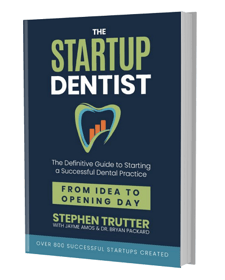
Dr. Joe in Florida opened a 50% PPO, 50% fee-for-service practice in an insurance-saturated area and built a thriving business his way. Dr. Shane in Texas eventually went out of network with some of the big-name carriers because his practice had earned the right to do so. Both stories are in The Startup Dentist, along with the practice owners who took every other path in between. Both are right. Both made the call that fit their market and their phase of business.
The mistake is treating year one and year ten like they require the same answer.
How To Know If Your Market Even Needs PPOs
Before you decide what to do with PPOs, you need to understand your market. That comes back to the 3D Framework: desirability, data, and demographics.
If you are opening in an area with a high concentration of self-employed professionals, strong household incomes, and a culture of paying for premium services, your math may support a fee-for-service or hybrid model from day one. If you are opening in an area where 70 to 80 percent of households get dental insurance through a major employer, you cannot simply ignore that reality. The patients are there. They are going somewhere. The question is whether they are going to you or to someone else who took the time to credential properly.
And yes, you can absolutely open fully fee-for-service from day one. We have plenty of clients who do, and they build great practices. But here is the part that gets glossed over in every fee-for-service rant on the internet: PPO credentialing is itself a patient acquisition channel. When you opt out of it, you have to replace that patient volume somewhere, and that somewhere is marketing. The fee-for-service startups that thrive do so because they invest more in marketing, more in reputation building, and more in referral systems on purpose. They are not lucky. They built a different acquisition engine, and they paid for it. If that is the path you want, go in with both eyes open about the budget.
This is exactly the kind of decision that should never be made based on a Facebook group post or what one cranky owner said at a CE event. We dig into these calls regularly on The Startup Dentist Podcast, and the through-line is always the same: a strategic call made with real data about your specific market.
The Bottom Line
PPOs are not a moral question. They are a strategic one.
For a startup, the goal is to fill the schedule, build cash flow, prove the model, and earn the right to make any choice you want about reimbursement five years from now. The owners who took strategic PPO participation seriously in year one usually have far more freedom in year five than the ones who tried to be a purist on day one and never made it past the cash crunch.
If you are sitting in your associate position right now and trying to figure out what your strategy should look like, that is exactly the kind of conversation we have on an Ownership Clarity Call. We will talk through your goals, your timeline, and what the path to ownership looks like for you.
Book your Ownership Clarity Call here: https://idealpractices.com/consultation-call
Frequently Asked Questions
Should a startup dentist take PPOs?
For most startups in most markets, yes, at least selectively. PPO credentialing is a patient acquisition channel, and brand-new practices need volume to hit their revenue ramp. The right answer is rarely "all PPOs" or "no PPOs." It is a strategic, carrier-by-carrier decision based on your specific market, your fee schedule, and your demographics.
Can you negotiate PPO fees as a startup?
No. As a startup, you have no leverage. No production history, no patient volume, no claims data to put on the table. Companies selling "PPO negotiation programs" to brand-new practices are selling a service that does not work at your stage. Get credentialed at the going rate and revisit negotiation a few years in once you actually have numbers behind you.
Is fee-for-service viable for a new dental practice?
Yes, in the right market and with the right marketing budget. Plenty of Ideal Practices clients open fully fee-for-service and build thriving practices. The catch is that PPO credentialing itself is an acquisition channel, so opting out means you have to invest more in marketing, reputation building, and referral systems to replace the patient volume.
How long should a new practice stay on PPOs?
There is no universal timeline, but most successful practices participate strategically in years one through three, then begin streamlining as their schedule fills and their reputation grows. Some go fully fee-for-service. Some keep a handful of strong carriers and drop the weak ones. The goal is to earn the right to choose, not to rush the exit.
Which PPOs should a startup dentist credential with?
It depends entirely on which carriers dominate your specific demographic and what their fee schedules pay against your fees. There is no national right answer. The right approach is a carrier-by-carrier analysis of fee schedules in your market, weighed against your overhead and goals.

Apr 28, 2026, 5:47:45 PM