A dentist posted in one of the dental Facebook groups a while back. He'd bought a practice two or three years earlier, and if I sum up what he wrote, it came down to this: I make a lot of money, I never see my family, and I hate my life. He bought it because it looked like a smart financial move. The practice sits hours from where his family lives, so he stays in another town during the week and sees his kids on the weekend. That's tough living, folks. It can be avoided, and it needs to be avoided.
That post is a big part of why I recorded this episode. For over a decade, Ideal Practices has focused on startups, and we're closing in on 1,000 of them. But for that same decade I've watched associates who buy practices run into the same wall. Finding the right practice is hard. The transition is harder. And getting your own vision inside a practice you already paid for can take years. One doctor told me it took him five of the six years he'd owned it. He handed a bunch of money to the other dentist, the team never once asked him what he wanted, and he was living in somebody else's practice, basically, for another five years.
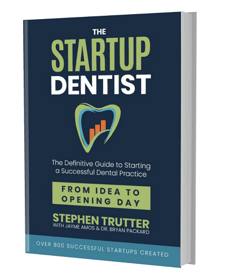
For almost two decades I thought startups and acquisitions were diametrically opposite. They're not. If you've read The Startup Dentist or sat in a Startup Practice Blueprint™ weekend, you'll recognize almost everything below. The due diligence, the financing, the team, the vision: the two paths mirror each other in ways that are almost eerie. So we built a 13-stage path for acquisitions the same way we built one for startups, and we've been running it with clients all over the country. Grab your notepad. This is what it looks like, and why every stage is there.
Why most acquisitions start in the wrong place
Most practices get bought on one question: does it cash flow? Yes, that matters, and we'll spend plenty of time on it. But it's one tiny piece of the whole equation. Is it in the right town? Are the patients the ones you want to treat for the next twenty years? What's the seller's reputation? And then the bigger question, the one nobody asks at the closing table: once you own it, how do you make it yours? How does the team start following your lead instead of waiting to see what the old doctor would've done? Keeping everything exactly the way it was is like moving into a house and keeping the previous owner's decor. Most people don't do that. The accounting view never gets you there, and neither does due diligence on its own.
Then there's the supply problem. On the Vision Call we do with every new client, I ask how they arrived at the startup path. About 75 percent of the time, part of the answer is that they looked for a practice to buy for a year, two years, and I've heard four. What they found was big practices they couldn't afford that a DSO was going to gobble up, underperforming practices everybody calls a diamond in the rough that would take years to build up, and the practice in the middle that everyone wants. Get in line, folks. There are 10, 15, 20 buyers for that one.
At some point you have to draw a line in the sand and say: I want to own a practice by this date. A startup takes 12 to 18 months from idea to opening day. An acquisition can take that long or longer, and the stories of dentists searching for years are real. Whichever path you choose should actually get you there. If you're still weighing the two, I've laid out how to decide between a startup and an acquisition, and the signs you're ready to own in the first place.
The 13 stages of a dental practice acquisition
You'll notice the first stages look exactly like the startup path. That's on purpose. Vision and demographics come first on both tracks because every later decision gets filtered through them.
Before you buy: stages 1 through 5
- Stage 1: Vision. Vision goes well beyond how many operatories you want. The real question is who you're going to be in that community. The seller has a reputation there, for better or for worse, and the patients and the team all know it. What will yours be? How do you want to be remembered when you eventually hand this practice to someone else? We start building that answer before closing, so that when the deal is done, the community already knows who you are and what you stand for. Metrics, marketing, team, growth: all of it ties back to this.
- Stage 2: Demographics. You've heard me on demographics for ten years now, and it matters just as much when you buy. You can't buy a practice, put it on a flatbed truck, and move it a town over because you don't like where it sits. So we evaluate the area the way we would for a startup. Are these the patients you want to treat long term? Do they have the dental spending habits to support you? Could you see yourself living there, or the next town over? I've had clients tell me the patients in the practice they bought weren't quite who they wanted to treat, but they bought it anyway. That's the trade you want to see coming.
- Stage 3: Identifying the ideal acquisition. Now we go find it. Size, area, cash flow, the seller's reputation, the infrastructure, the room to grow. Preparation matters here more than most people think. Brokers get a lot of phone calls from associates, and they go with the most real opportunity. I talk about the silver platter method when it comes to financing, because banks love our clients for one reason: they're prepared and in the right financial position. That same preparation is what gets your name to the top of a broker's list.
- Stage 4: Analysis and negotiation. The practice is listed at $700,000. Can you get it for $600,000? Maybe, but there has to be financial evidence to support that. The real question is whether the asking price lands in a range of values that makes sense. Too high has to be too high for a reason: abnormal expenses, the EBITDA, the cash flow, the age of the equipment. The analysis runs many pages across many documents and ends with a clear answer, this price makes sense or this is where it needs to move. That's what due diligence actually covers, and it's where buyers fall into the hidden traps I see over and over. Keep in mind you're probably not the only buyer looking. One more thing to weigh: older doctors often send out procedures you're trained to do, and that's real upside. But I don't buy on potential alone, the same way I wouldn't pick a startup location because a huge employer might bring 2,000 jobs to town someday. If the jobs aren't there yet, we're speculating.
- Stage 5: Financing. Once you're under a purchase and sale agreement, the bank enters the picture. Acquisition financing has its own nuances. The lender isn't just looking at you as a buyer; they're looking at the practice too. It's a marriage of the two, and the financing has to make sense for both. We explore multiple banks, and if the seller owns the building, that becomes its own conversation. My rule of thumb: have at least 5 to 10 percent of the purchase price in liquid assets, money you could get to tomorrow.
Before you close: stages 6 through 8
- Stage 6: Ownership fundamentals. Where's your ownership skill set today, and what exactly are you buying? Our transition team evaluates the current staff, the systems, the practice management, the charts, the protocols. This isn't so you can walk in on day one and fire everybody. It's so we understand what's there and can start mapping what you want it to become. Most of that groundwork you can start building while you're still an associate. The things you decide you want here get implemented after you own it.
- Stage 7: Insurance credentialing. Credentialing can take several months, so it starts early and runs alongside everything else. If you've never put through a claim, this stage also covers how dental insurance actually works, as ugly as it can be, and how to think about insurance as a strategy instead of signing everything out of fear.
- Stage 8: Ownership day. Closing. The announcements are out, patients know, banking is set, financial policies are ready, the operatories are set up for you, and the team is prepared for you. It's a celebration. It's also the day you become a brand-new practice owner who may never have made a hiring decision or set a protocol in your life, and that's exactly why we don't stop here.
After you own it: stages 9 through 13, the Acquisition MBA
After closing, we don't say bye, have a nice trip. Stages 9 through 13 are the Acquisition MBA, an eight-month program where your vision actually gets implemented inside the practice and you become a confident owner. These don't run one month at a time. Every single month we're working on all of them. It's the same reason we walk startup clients through their whole first year: opening day is the start, not the finish.
- KPIs and metrics. Revenue per patient, collections, overhead, scheduling efficiency, patient retention. A lot of acquired practices had no measurements at all. And expect some attrition after a sale, both patients and team. People put it anywhere from 10 to 30 percent, and it could be less or more. That's okay. What you can't do is aim at a goal nobody's measuring.
- Vision implementation and the seller transition. Conventional wisdom says change nothing for six months. Nope. Why buy a practice if you don't want to make any changes? The changes just need good intention and a plan. On the seller staying on: don't count on learning the business from them. They're thinking about retirement, and what they'd teach you is how they did it for the last three or four decades. Too short a transition and patients and team don't transfer well. Too long and everyone keeps asking the old doctor the questions they should be asking you, and if the seller's paid on production in a practice that only has the patient flow for one doctor, they become a financial anchor.
- Marketing and growth. I see this one constantly. A doctor buys a practice, checks the box, and a year later posts that they need new patients. People leave, other owners open nearby, and the box never covered growth. Website and social media matter, but the bigger piece is the community: ground marketing, becoming the new face people recognize, and purpose beyond revenue. That's what a DSO can't offer and you can. It's the same community-first playbook we use to fill startup schedules before the doors open.
- Systems and team. Stabilize first, then evaluate who fits the culture you're building for the long haul. Most of you have never managed, hired, or fired anyone, so we work on leadership, tough conversations, and accountability. Dan Sullivan's line from Strategic Coach has been stuck in my head for years: who, not how. The wrong person in an acquired practice erodes it from the inside. I can line up dozens of our startup clients whose team after year one isn't the team they opened with. That's reality, and it's fine.
- Future practice trajectory. By stage 13 the team is yours, the vision is in the walls, and the question becomes where you take it. Expanding services, adding what the previous owner used to send out, growing this practice into something that's not only yours but highly successful.
The whole point is freedom and control
You're buying a practice to become an owner, and you're becoming an owner for the freedom and control that come with it. Don't let the way things were done for years in someone else's practice get in the way of that. With the right practice and a plan built with intention, it will become yours, it will grow, and you're going to love doing it. That's what the acquisition track at Ideal Practices is built to do.
And yes, this is still The Startup Dentist Podcast. If you've never owned a practice, you're still a startup to me. That's why I'm keeping the name.
If you're an associate thinking about buying and you don't know where to look or who to ask, start with a free Ownership Clarity Call with Jen Gilbert, our Startup Strategic Advisor. Startup or acquisition, it's the same team, and if your path changes along the way, you can switch tracks without new paperwork.